The US Military’s Use of Advanced AI Tools in the Conflict with Iran: Implications for Business and Technology
Estimated reading time: 10-15 minutes
Key Takeaways:
- The US military has confirmed the use of advanced AI tools in its operations against Iran.
- The military’s AI strategy includes real-time intelligence analysis, autonomous systems, predictive analytics, and decision-making acceleration.
- Businesses can learn from the military’s AI applications, such as predictive analytics, autonomous systems, and real-time data processing.
- AI TechScope can help businesses implement AI-powered solutions for workflow automation, decision-making, and digital transformation.
Table of Contents
- The US Military’s Use of Advanced AI Tools in the Conflict with Iran
- How AI is Reshaping Military Operations
- Connecting the Military’s AI Strategy to Business Efficiency
- Implications for AI Automation and Ethical Considerations
- Practical Applications for Businesses
- Future Trends and AI TechScope’s Role
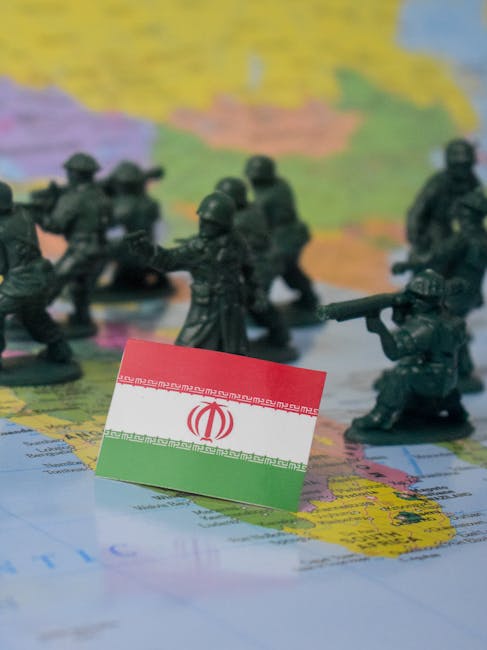
In a groundbreaking confirmation, the US military has revealed its deployment of advanced AI tools in its operations against Iran. This revelation, reported by Al Jazeera on March 11, 2026, underscores the accelerating integration of artificial intelligence into modern warfare. While the specifics of the AI systems remain classified, the announcement signals a pivotal shift in how nations leverage technology for strategic advantage. For businesses and tech professionals, this development highlights the transformative potential of AI beyond military applications—and the urgent need to understand its implications for automation, decision-making, and digital transformation.
How AI is Reshaping Military Operations
The US military’s use of AI in the Iran conflict is not an isolated event but part of a broader trend. However, the confirmation by US officials adds a new level of urgency to understanding how AI is being weaponized. According to reports, the AI tools employed include:
- Real-time intelligence analysis: AI algorithms process satellite imagery, drone footage, and signals intelligence to identify threats, track movements, and predict enemy actions.
- Autonomous systems: Unmanned aerial vehicles (UAVs) and robotic platforms use AI for navigation, target recognition, and adaptive responses to dynamic environments.
- Predictive analytics: Machine learning models anticipate Iran’s military strategies by analyzing historical data and current patterns.
- Decision-making acceleration: AI-powered command systems assist generals and analysts in evaluating options, reducing response times from hours to seconds.
These tools are not just about efficiency—they are about gaining an edge in a domain where speed and accuracy can determine the outcome of conflicts. For business leaders, the parallels to AI-driven decision-making and automation are undeniable.
Connecting the Military’s AI Strategy to Business Efficiency
While the US military’s use of AI is rooted in defense, the underlying technologies have direct applications for businesses. For example:
- Predictive analytics in the military mirrors how companies use AI to forecast demand, optimize supply chains, and personalize customer experiences.
- Autonomous systems align with AI-powered robotics and IoT devices transforming manufacturing and logistics.
- Real-time data processing mirrors the need for businesses to act swiftly on market trends, customer feedback, and operational metrics.
At AI TechScope, we help organizations implement n8n workflow automation to replicate this level of efficiency. By integrating AI tools into your business processes, you can automate repetitive tasks, reduce human error, and scale operations with unprecedented precision.
Implications for AI Automation and Ethical Considerations
The US military’s confirmation of AI use raises critical questions about the future of technology in conflict—and by extension, in business. Key implications include:
- AI arms race: As nations invest heavily in AI, businesses may face increased competition in adopting similar technologies to stay ahead.
- Ethical dilemmas: The autonomy of AI systems in warfare has sparked debates about accountability, bias, and unintended consequences—issues that apply equally to AI in business decision-making.
- Workforce transformation: Just as soldiers rely on AI to augment their capabilities, employees across industries will need tools to streamline workflows and focus on high-value tasks.
For AI TechScope, these challenges are opportunities. Our AI consulting services help businesses navigate the ethical complexities of automation while ensuring compliance with evolving regulations. We also specialize in training teams to use AI responsibly and strategically.
Practical Applications for Businesses
The technologies used by the military are not out of reach for enterprises. Here’s how AI can be applied to drive growth and efficiency:
1. Automating Complex Workflows with n8n
Just as the military uses AI to process vast amounts of data in real time, businesses can use n8n automation to connect tools like CRM platforms, marketing software, and customer support systems. For instance, an e-commerce company might automate order tracking, inventory management, and customer notifications using AI-driven workflows.
2. Enhancing Decision-Making with Predictive Analytics
The US military’s predictive models for Iran’s strategies can inspire businesses to use AI for forecasting sales, identifying market risks, and optimizing pricing. AI TechScope’s consultants can help you build custom models tailored to your industry’s needs.
3. Deploying AI-Powered Virtual Assistants
Military personnel rely on AI for rapid information retrieval and task delegation. Similarly, AI-powered virtual assistants can handle everything from scheduling meetings to analyzing customer data, freeing employees to focus on innovation.
Future Trends and AI TechScope’s Role
The US military’s adoption of AI is part of a global trend toward AI-driven national security. As this technology matures, we can expect:
- Increased collaboration between governments and private AI firms to develop cutting-edge tools.
- More sophisticated AI systems capable of handling complex, multi-step tasks in both military and civilian contexts.
- Stricter regulations to govern AI’s use in sensitive domains, influencing how businesses implement automation.
At AI TechScope, we’re preparing businesses for this future. Our expertise in AI-powered website